
Walk the floor at any marketing conference this year, and you'll hear the same refrain. First-party data is the new oil, and every company with large daily unique visitors is racing to monetize those eyeballs. Uber's selling ads. DoorDash is selling ads. United, Chase, and Marriott are all building media networks based on what they know about you. Commerce media, the umbrella term for all of it, is on track to reach roughly $142 billion and nearly a quarter of US digital ad spend by 2030.
Retail media is the well-known corner of that world. When most people say "retail media," they mean Amazon and Walmart. Fair enough. They own most of the dollars today.
But here's the number nobody puts on a slide. In December 2025, more than 80% of grocery sales still occurred in physical stores, according to Brick Meets Click, a grocery industry research and analytics firm. In-store retail media accounted for less than 1% of retail media spend. That's not a gap. That's an arbitrage. The shopper stands in the aisle with the product in hand, at the exact moment of decision, and it's the one advertising moment almost no one is buying.
So why has in-store been "next year's thing" for a decade? Two walls, yet most people talk about only one.
The first is execution, and it's the bigger one. In-store advertising has existed for a century: paper signs, end caps, and shelf tags. Then screens showed up, but they were just digital billboards. A slick Tide ad by the front door, even though you're nowhere near the cleaning aisle. That's out-of-home advertising with a power cord.
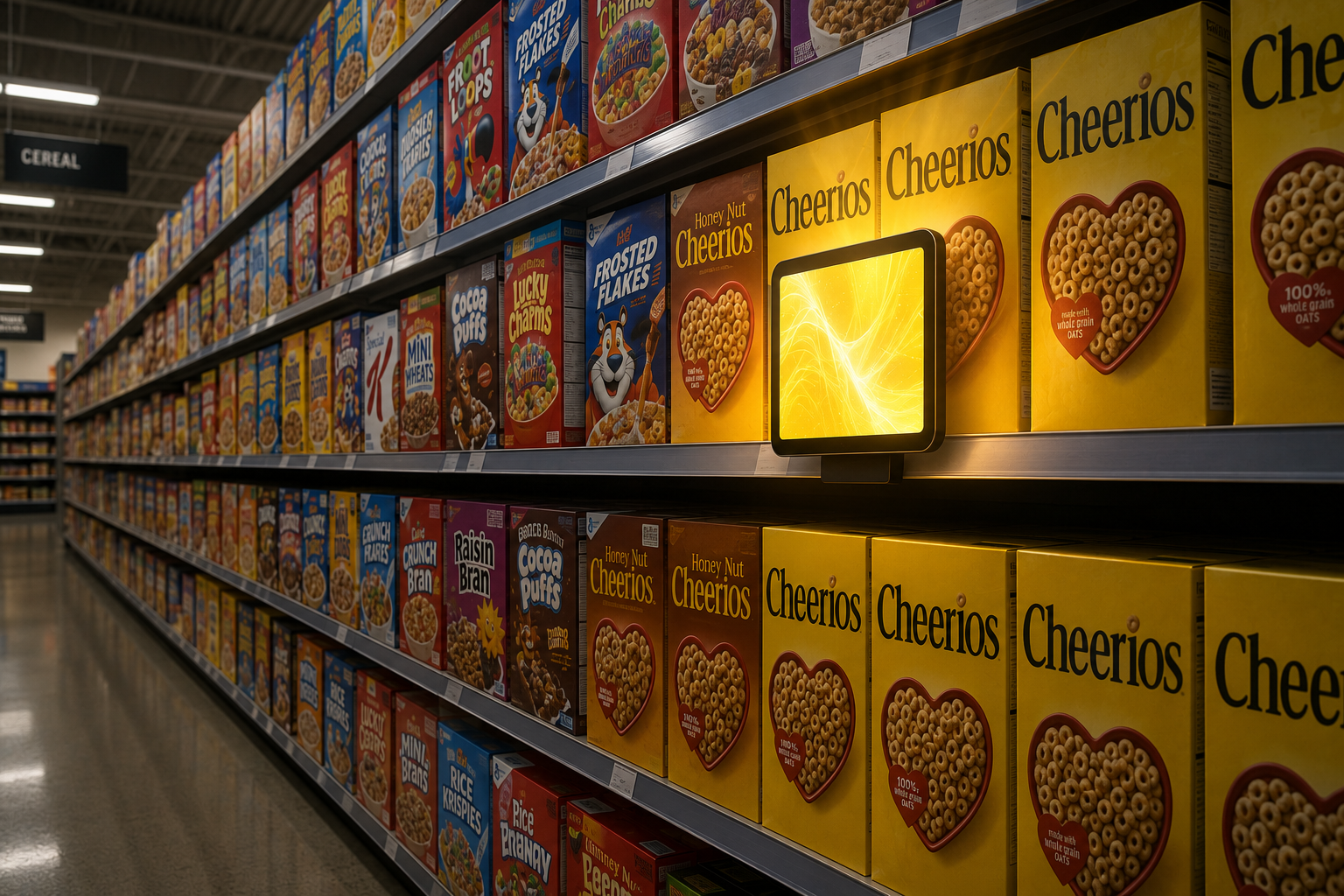
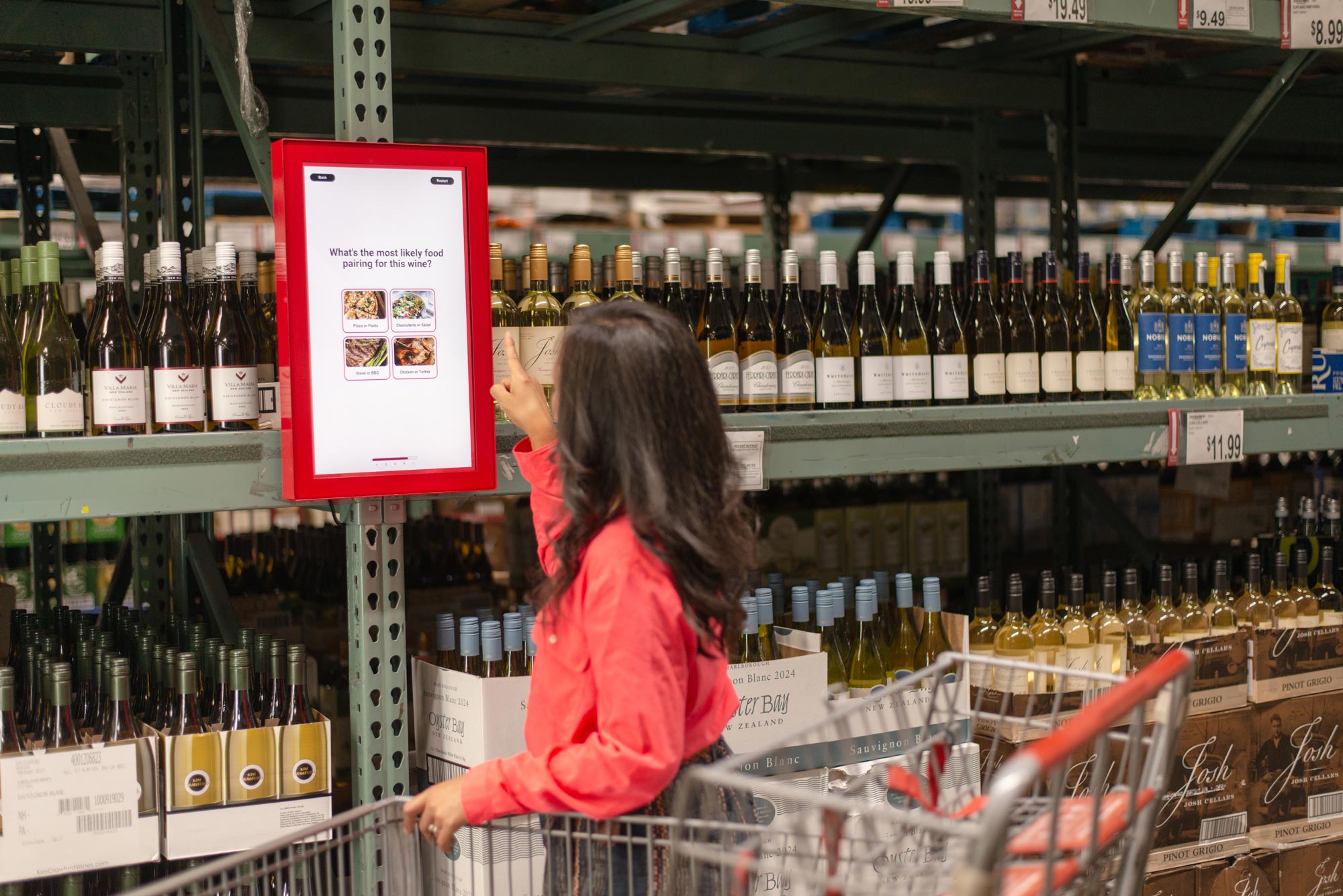
The unlock isn't just a screen. It's a screen co-located with the product. You're standing in the cereal aisle, and a short, genuinely watchable clip about a new flavor or brand catches your eye, so you reach for a box. Nobody browses in a grocery store. You walk in with a list. You're usually in a hurry. You're in that aisle because you're buying, right now. It's the physical version of typing "paper towels" into Amazon's search box. You didn't search out of boredom. You searched because you're about to buy.
The second wall is measurement. For years, nobody could prove that an aisle screen drove a sale, so budgets stayed in online retail media, search, social, and streaming TV, where the math was clean. Solve that, and the conversation with a brand's CFO and CMO gets very short.
We've watched this movie before. Eyeballs migrated to streaming TV years before ad dollars followed. The engaged audience was never the question. The obstacle was a myriad of puzzle pieces to target, serve, and measure CTV ads, aka infrastructure. In-store is in the same shape, and the eyeballs have been in the store since the dawn of retailing.
Billions of dollars in digital advertising flooding into brick-and-mortar shopping venues is an opportunity waiting to happen. As with the evolution of CTV advertising, the biggest chunk of that opportunity lies in the infrastructure layer that makes it work.
A screen in the aisle, next to the thing you're reaching for, at the moment you're reaching for it. Sounds simple. It's the opposite. One store is easy. Now scale to thousands of screens across hundreds or thousands of stores, and make sure the ad on each screen is actually next to the product it's selling. Then rotate it daily. A ketchup spot on Tuesday, dish soap on Wednesday, and something else on Thursday night. Price every slot. Run fifteen creatives across fifty stores to see which one lifts. That's not signage. That's big data on steroids, and it breaks most people who try it.
Last but not least, you have to prove it worked by reporting lift and return on ad spend to both the brand and the retailer. Two masters, one set of plumbing. Get it right, and the pitch to a brand's CFO and CMO is one line: here's your four-times return. Get it wrong, and you're back to selling billboards.
Big brands are drowning in the effort to advertise across a thousand regional grocery chains, so they need one partner who can execute this concept consistently and reach the long tail at scale. Every retailer that isn't Walmart or Amazon holds first-party data with very limited ways to monetize it, so they need infrastructure they'll never build themselves.
One of our portfolio companies, Looma, operates co-located screens across roughly 1,100 grocery locations, reaches 27 million shoppers a month, and reports full-funnel results, averaging around four times the return on ads bought on its network. That isn't more ad units. That's the store finally providing a measurable media play.
The industry spent the last few years sprinting toward every new slice of retail media it could find. The biggest one was in front of it the whole time: inside the store.